


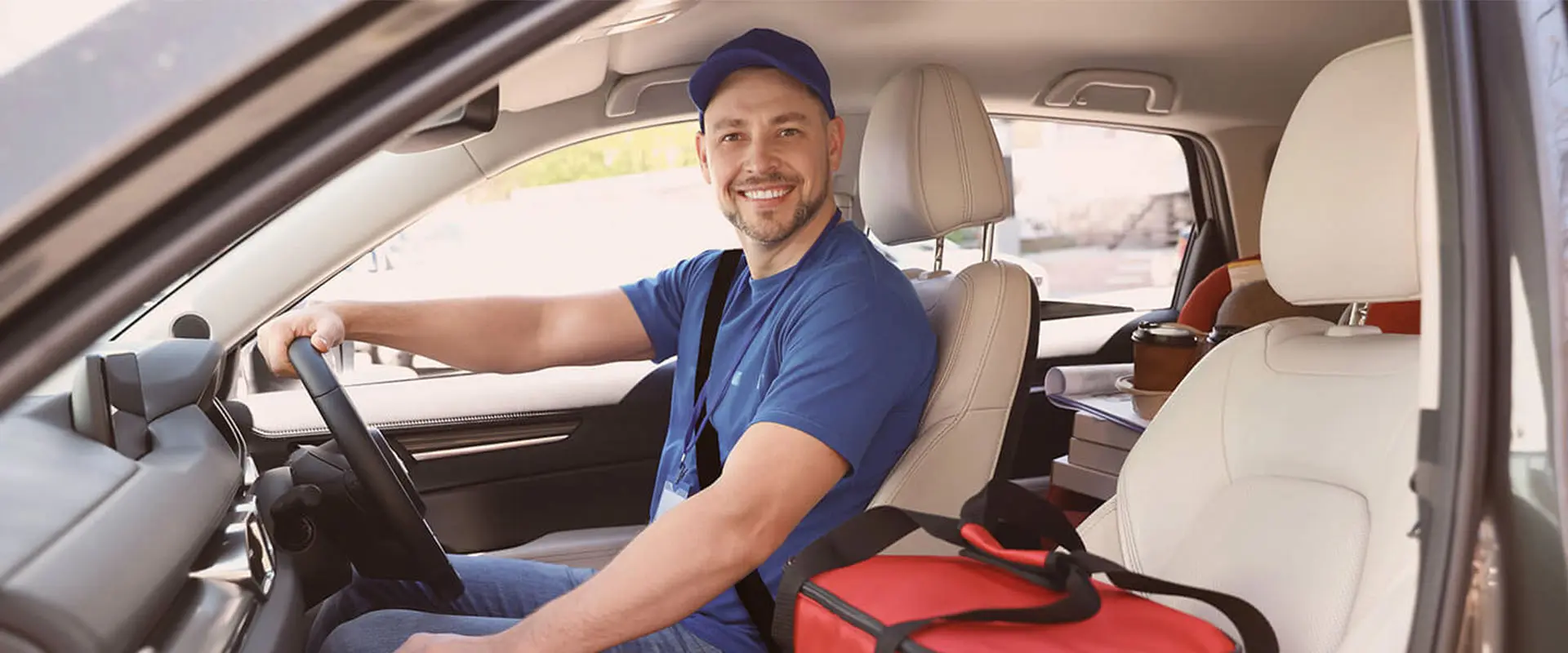
If you are paid to deliver parcels, packages, or food to multiple locations, a standard personal car or van insurance policy is not enough. By law, you must have specialist Hire and Reward (H&R) insurance, which covers the commercial carriage of goods for payment. Without this specific cover, you could be personally liable if you have an accident while working.
Whether you are scanning parcels for Amazon Flex, dropping off the morning run for Evri or DPD, or delivering local takeaways, multi-drop delivery work is fast-paced. Between managing tight delivery windows and navigating unfamiliar streets, you have a lot on your plate.
One of the most common questions new drivers ask is: “Can I just use my standard car insurance or a standard business policy?”
The short answer is no. Standard policies are simply not designed for the frequent stopping, starting, and high mileage that multi-drop driving involves. Using the wrong insurance isn’t just a paperwork error—it means you are legally driving without insurance.
Here is exactly what you need to know about getting the right cover, protecting your income, and staying safely on the right side of the law.
The Legal Minimum: What is Hire and Reward Insurance?
Hire and Reward (H&R) insurance is a specific class of commercial vehicle cover. It legally permits you to transport goods or passengers in exchange for payment. If you are making money by moving an item from point A to point B (or points B through Z), this is the cover you need.
Why standard ‘Business Use’ won’t cover multi-drop work
Many drivers mistakenly believe that upgrading their personal policy to “Business Use (Class 1 or 2)” covers them for courier work. It does not. Standard business use covers you to drive between multiple fixed locations—such as a regional manager visiting different offices. It explicitly excludes the delivery of goods or merchandise for profit.
The table below breaks down the differences so you can easily spot where your current policy might fall short:
| Insurance Class | What it Covers | Is it suitable for multi-drop delivery? |
| Social, Domestic & Pleasure (SDP) | Everyday personal driving, shopping, and commuting to one fixed workplace. | ✗ No. Will be completely void during a delivery run. |
| Standard Business Class 1/2 | Driving between multiple fixed regional offices or visiting clients. | ✗ No. Does not cover delivering goods or parcels for profit. |
| Hire and Reward (H&R) | Carrying other people’s goods, parcels, or food in exchange for money. | ✓ Yes. This is the legally mandatory minimum for multi-drop work. |
The risks of driving underinsured
Driving without the correct Hire and Reward cover is treated the same as driving with no insurance at all. According to GOV.UK guidelines on driving without insurance, the police can issue a fixed penalty of £300 and 6 penalty points if you are caught. If the case goes to court, you could face an unlimited fine and be disqualified from driving.
Furthermore, if you are involved in an accident while working without H&R cover, your insurer will likely void your policy. This means you would be personally responsible for repairing your vehicle and paying for any damage or injury caused to third parties.
Essential Types of Insurance for Multi-Drop Couriers
While Hire and Reward is the legal minimum to get your vehicle on the road, a robust multi-drop insurance setup usually consists of three distinct parts. It is crucial to understand the limitations of each.
1. Vehicle Cover (Hire and Reward)
As mentioned, this covers the vehicle itself while you are using it for work. However, H&R insurance does not automatically cover the value of the items inside your vehicle. If your van is stolen with 50 customer parcels inside, your vehicle cover will deal with the van, but not the lost cargo.
2. Goods in Transit (GIT) Insurance
To protect the parcels, you need Goods in Transit insurance. This covers the items you are carrying against theft, loss, or damage while on the road.
Important limitation to note: Almost all courier insurance policies have strict “unattended vehicle” clauses. If you pull up to a house, leave your keys in the ignition or the engine running, and jump out to drop a parcel at the door, any resulting theft claim will almost certainly be rejected. You must lock the vehicle and remove the keys at every single drop.
3. Public Liability Insurance
When you are carrying heavy boxes through residential gates or commercial loading bays, accidents happen. Public Liability insurance protects you if a member of the public is injured, or their property is damaged, as a result of your business activities (for example, if a customer trips over a parcel you left on their step).
Choosing the Right Vehicle Cover: Car vs. Van
The type of vehicle you drive will dictate the specific policy you need.
Using your personal car
If you are doing gig-economy work like Amazon Flex or casual food delivery, you are likely using your own personal car. You will need a specialist courier car insurance policy that blends your everyday personal driving with your commercial delivery work.
Using a commercial van
If you handle heavy-duty, multi-drop routes for major networks like DPD or Yodel, you will be driving a van. Because vans carry heavier loads and spend longer hours on the road, the risk profile is different, and you’ll need a courier van insurance policy. You can read our detailed guide explaining whether couriers can use standard van insurance.
What Influences the Cost of Multi-Drop Insurance?
Because multi-drop drivers cover more miles, navigate busy residential streets, and stop frequently, the statistical risk of minor bumps and scrapes is higher. Consequently, premiums are generally higher than standard personal policies. Insurers calculate your premium based on factors like:
- Your age and driving experience
- Your vehicle’s engine size, age, and security features
- Your location and typical delivery radius
- Your claims history and any driving convictions
How to safely lower your courier premiums
While we cannot guarantee specific savings, there are several practical steps you could take that may help reduce your premium costs:
- Be accurate with your mileage: Don’t overestimate your delivery miles, but never underestimate them either. Give the most accurate annual figure possible.
- Increase vehicle security: Adding an immobiliser, a steering lock, or an industry-approved tracker can demonstrate to insurers that your vehicle is at a lower risk of theft.
- Consider a higher voluntary excess: Agreeing to pay a larger portion of any potential claim upfront can sometimes lower your annual premium. Just ensure you can comfortably afford the excess amount if the worst happens.
- Drive safely: Over time, building up a No Claims Discount (NCD) is one of the most effective ways to bring costs down.
Pre-Delivery Checklist
Before you accept your first block of deliveries or load your vehicle at the depot, ask yourself:
- Do I have an active Hire and Reward policy in place?
- Does my policy cover the specific type of goods I am carrying?
- Do I have Goods in Transit cover to protect the parcels against damage or theft?
- Do I have Public Liability cover in case I accidentally damage a customer’s property?
- Am I in the habit of locking the vehicle and taking the keys with me at every single drop?
Frequently Asked Questions (FAQs)
Can I buy Hire and Reward insurance as a short-term top-up?
Some providers offer short-term or pay-as-you-go H&R policies (e.g., 30-day cover). However, you must check with your main personal car insurance provider first. Many mainstream insurers will instantly cancel your underlying personal policy if you apply a third-party, short-term courier top-up over it.
Is Goods in Transit insurance legally required?
Unlike Hire and Reward insurance, Goods in Transit is not a strict legal requirement to drive. However, almost all major delivery networks and courier companies require you to have it before they will offer you a contract.
Does multi-drop insurance cover me for transporting passengers?
No. Transporting passengers for money (such as driving for Uber or a local taxi firm) requires Private Hire or Public Hire taxi insurance, which is an entirely different class of cover.
Multi-Drop Insurance: Key Takeaways
Multi-drop delivery work can be a flexible and rewarding way to earn an income, but it comes with specific insurance requirements that standard personal or business vehicle policies simply do not cover. At a minimum, you will need Hire and Reward insurance to legally carry goods for payment, while Goods in Transit and Public Liability cover can provide valuable protection for your business and finances.
Before you start delivering, take the time to check that your cover matches the work you do. Having the right insurance in place can help protect your vehicle, your livelihood, and your peace of mind every time you head out on a delivery route.